Carnivore, Freedom, & Prepping

When I throw out the word “prepper,” what images come to mind? The media wants you to think of a crazy gun collector with an underground bunker, dressed head to toe in SWAT gear, waiting eagerly for a zombie apocalypse. You might picture a toothless backwoodsman stocked up with rice and beans or an attic full of MREs. In any case, our society has done an excellent job denigrating the concept of preparedness - and that’s a problem.
I’m a proud prepper - not the zombie apocalypse kind. The common sense kind. In my mind, a prepper is anyone intelligent enough to (wait for it) prepare for life’s inevitable speed bumps - whether it’s a job loss or a medical emergency, we will all experience an unforeseen event with potentially negative consequences in 2026.
It just makes common sense to be prepared for life’s vicissitudes. I began listening to Jack Spirko over at The Survival Podcast about a decade ago and the purpose of his show is: “Helping you live a better life, when times get tough, or even if they don’t.”
Why Prep As a Carnivore?
Let’s talk about it. In the carnivore community, we recognize that global elites like Bill Gates and his ilk are pushing populations to eat less meat and more soy and crickets. They even disregard regenerative agriculture, offering us Beyond Meat slop instead. Why?
Because they’re the owners of the behemoth monocrop agriculture companies that manufacture the industrial engine lubricant they euphemistically call “vegetable oil” and package as “heart healthy” whole grain, plant-based products. They profit from creating these products, causing us harm, and selling us the remedy.
On top of the pure profit motive, when we as a population eat soy and seed oils, we become sluggish. Our brains and bodies slow down and we lack the energy to think and act independently. You saw it during COVID when your neighbors unquestioningly complied with arbitrary mask mandates and 6 feet social distancing rules that Fauci pulled out of his ass.
These racketeers can’t profit from an independent, strong population. When you spend your money at a regenerative farm, you take it out of the pocket of Big Food. When you raise quail or chickens in your backyard, you don’t need the Beyond Meat slop. But if grocery store shelves begin offering more beans, crickets, and Beyond Burgers, what will you do? Are you doing anything to become more independent from the system? Cultivate relationships with your local farmers, and if possible, I encourage all carnivores to have their own source of backyard protein. I personally raise quail and enjoy gathering eggs every day.
You should also consider how you will obtain meat in case of a weather emergency or job loss. Do you have enough meat to make it through…a day…a week...a month?
Pantry Storage
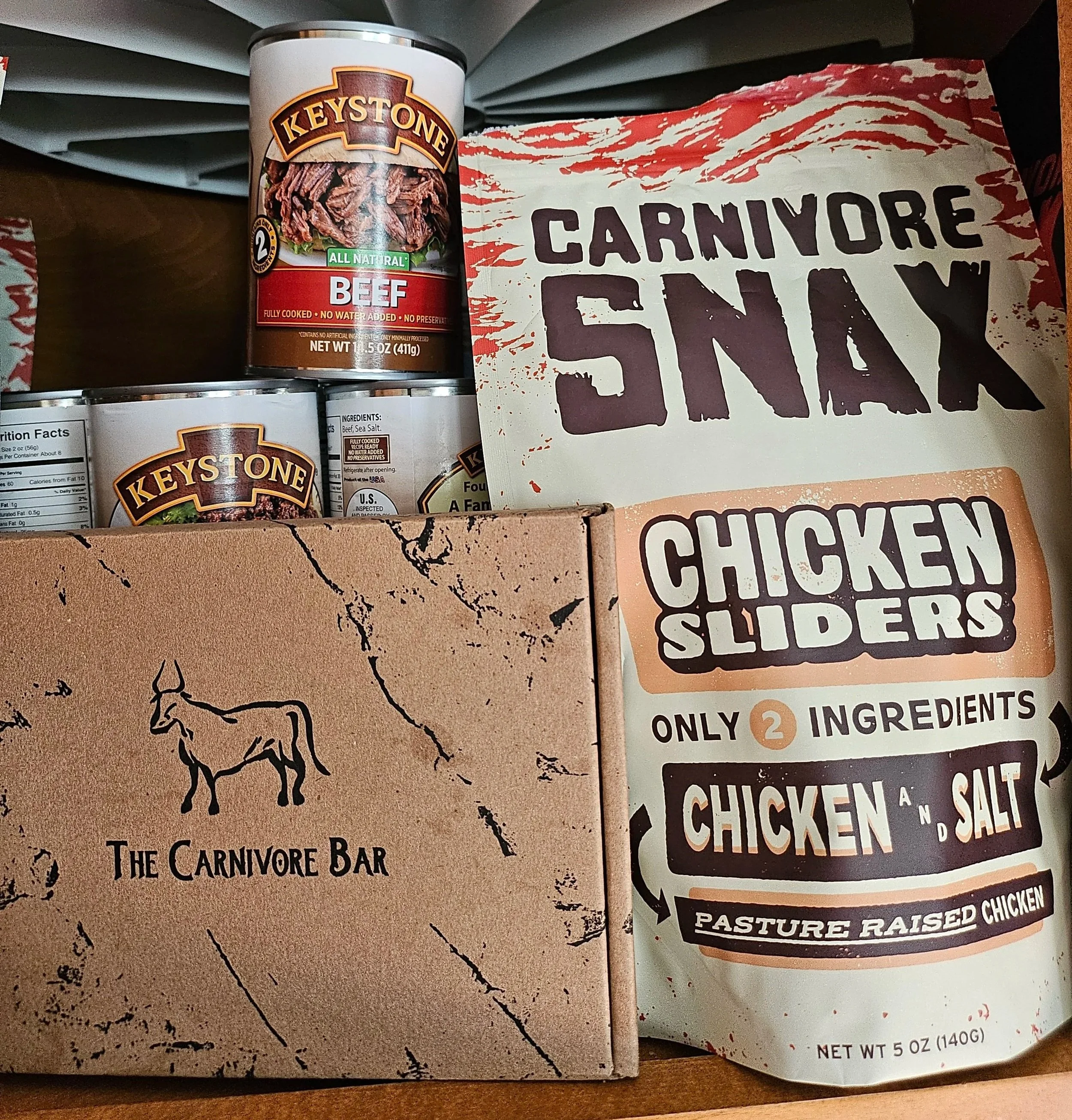
I recommend a 60 to 90 day supply of protein and fat for all members of your household. You’ll also need the fuel to cook it with. If you don’t have any backup storage, no need to panic or buy the expensive emergency kits marketed on podcasts. Start with buying a few cans of salmon or chicken at the grocery store next time you shop. I gradually built up my pantry over time and now have a comfortable 90 day food supply for myself. Don’t forget a way to cook in case of a power outage! I have several different options as listed below. Remember, this is my list. If you don’t eat these items on a regular basis, don’t buy them for an emergency situation! The last thing you want is to be grouchy because the power is out and then be forced to eat something you don’t like.
Buy and store the foods you eat daily, remembering to rotate out the old packages as you bring home the new. Act like you’re a grocery store and follow FIFO protocol - First In, First Out. It may seem like an inconvenience, but as you make it a habit after a few trips home from the store, it will become second nature and you won’t even have to think about it.
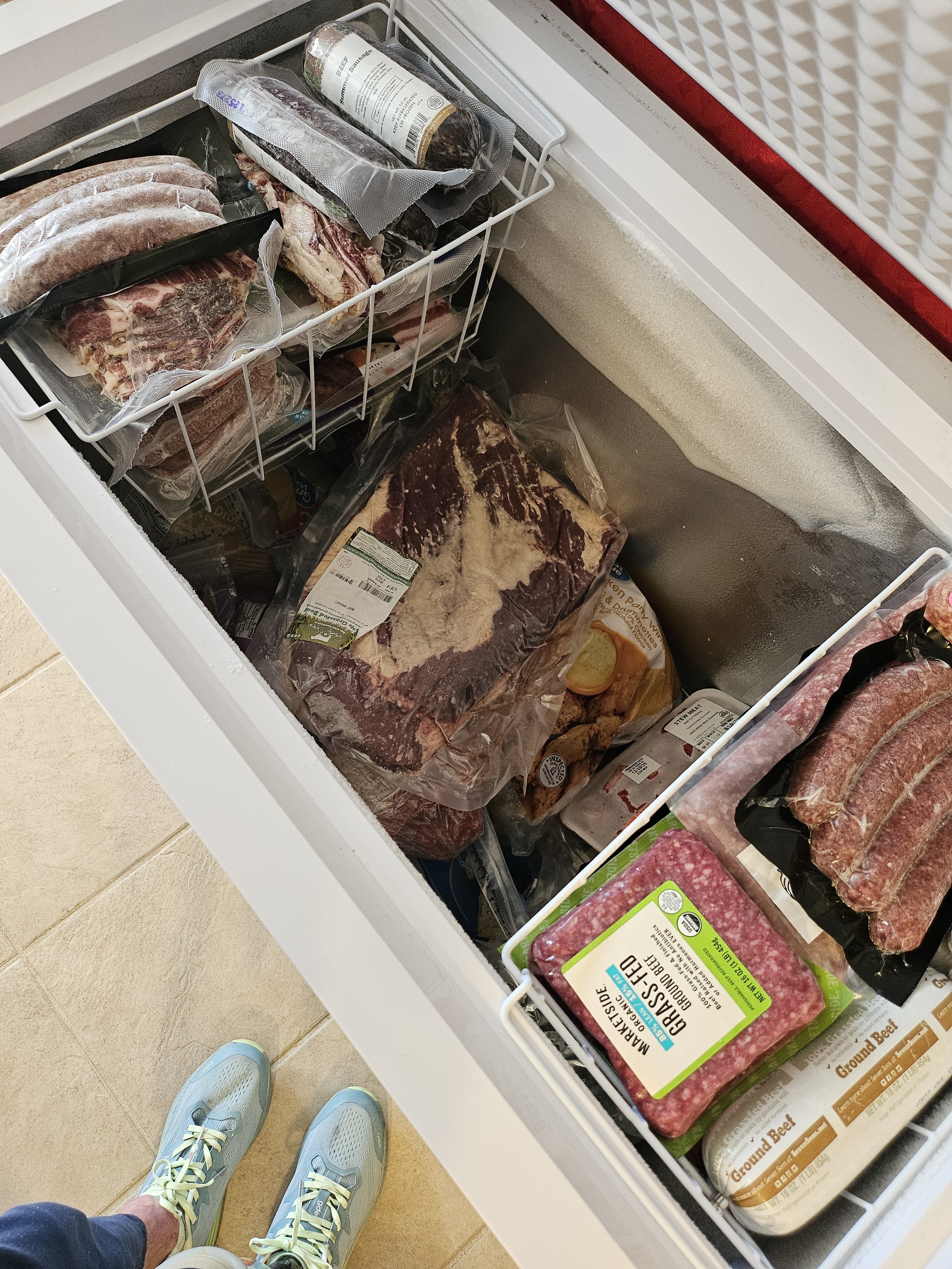
A peek at my chest freezer:
I rotate the items in my freezer as I buy new ones. All my favorites are here, including chicken wings, brisket, summer sausage, and bacon. I keep additional items in the freezer attached to my fridge as well, many of which are already cooked. In an emergency, you may want access to pre-cooked foods for convenience.
The items below are some of my favorite foods; I eat these on a regular basis and therefore keep plenty in storage. Your list will look different, and that’s great! Make sure you store both protein AND fat. Having a source of satiating fat in an emergency is very important. Whether it’s tallow, canned butter, or powdered milk, fat is an important source of caloric density and therefore energy.
-
Great Value Alaskan Pink Salmon
Keystone Meats: chicken, pork, turkey, and beef (shredded and ground)
Meyenberg Goat Milk
Red Feather Pure Creamery Butter
Safe Catch Tuna
Zoup Bone Broth (chicken and beef)
-
Anthony’s heavy cream powder
Carnivore Bar
Carnivore Crisps
Carnivore Snax (meat chips and tallow)
Chomps meat sticks
Epic venison bars
Equip protein powder
Grazly meat slabs
Judee’s egg white powder
Keto Brick
Keto Chow
LMNT electrolyte powder
Miracle Noodles egg white spaghetti
-
I acquired a quarter cow from Seven Sons Farms and a whole lamb from Billy Doe Farms. These animals arrive already portioned into convenient cuts. Buying in bulk is a great way to store for a family. You may consider splitting the cost of a whole cow with another family for additional savings.
Of course, as a daily consumer of chicken wings, I also keep at least 30 pounds of wings in the freezer and rotate them out as I buy more.
Your family’s needs will be different than mine. Remember to store what you eat and eat what you store!
-
Butane camping stove
Charcoal grill (I keep the disposable ones in my car)
Sun Oven
Wood stove
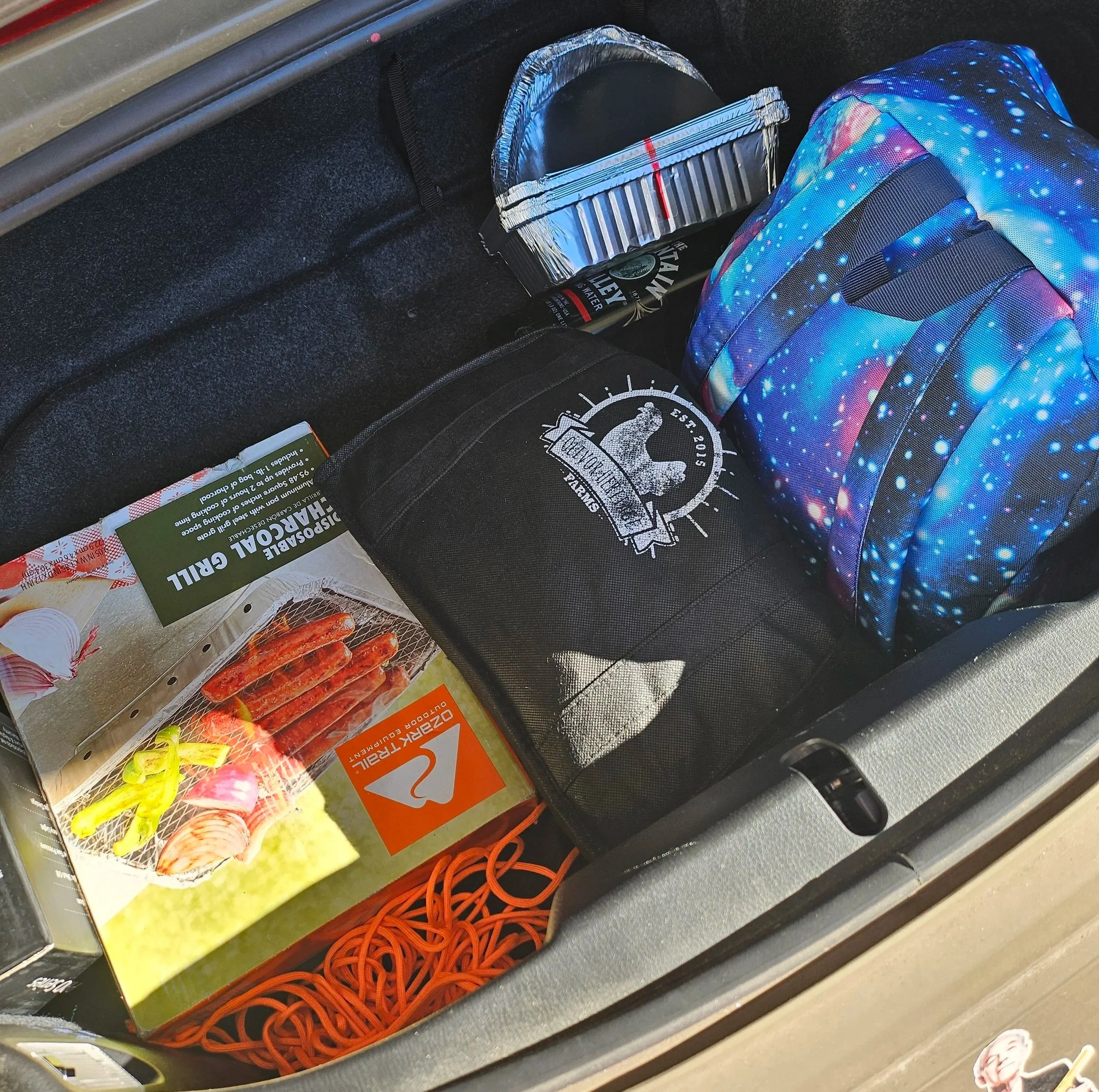
In addition to the typical items you should keep in your vehicle, like a tire plug kit and tire inflation device, I have canned meats, a can opener, and disposable grill just in case I get stranded and need a comforting carnivore meal. I also have a complete “go bag” that includes a few different types of Carnivore Snax.
Backyard Protein
I’ve been raising quail since 2019 and it’s an easy way to have a completely independent source of protein and fat. It demonstrates how well my prepping and carnivore lifestyles integrate. I am in complete control of the birds’ diet and choose to feed them soy-free; this meat and the eggs are available to me anytime, including when store shelves are bare. Quail are a great alternative to chickens, in my opinion - they’re smaller, less smelly, quieter, and take less time to reach sexual maturity. Quail begin laying eggs at 6-8 weeks of age instead of 6 months like chickens. They’re easy to hatch and butcher, and make a great addition to your carnivore diet. Check out my blog at Quail & Cotton to learn more and get started!
Interested in learning more on preparedness and lifestyle design? I encourage you to check out The Survival Podcast; I’ve learned a great deal from Jack over the years, and he has cultivated a vibrant, supportive community. I’d love to hear your thoughts on my list and this post! Message me on Instagram or shoot me an e-mail anytime.
